Introduction
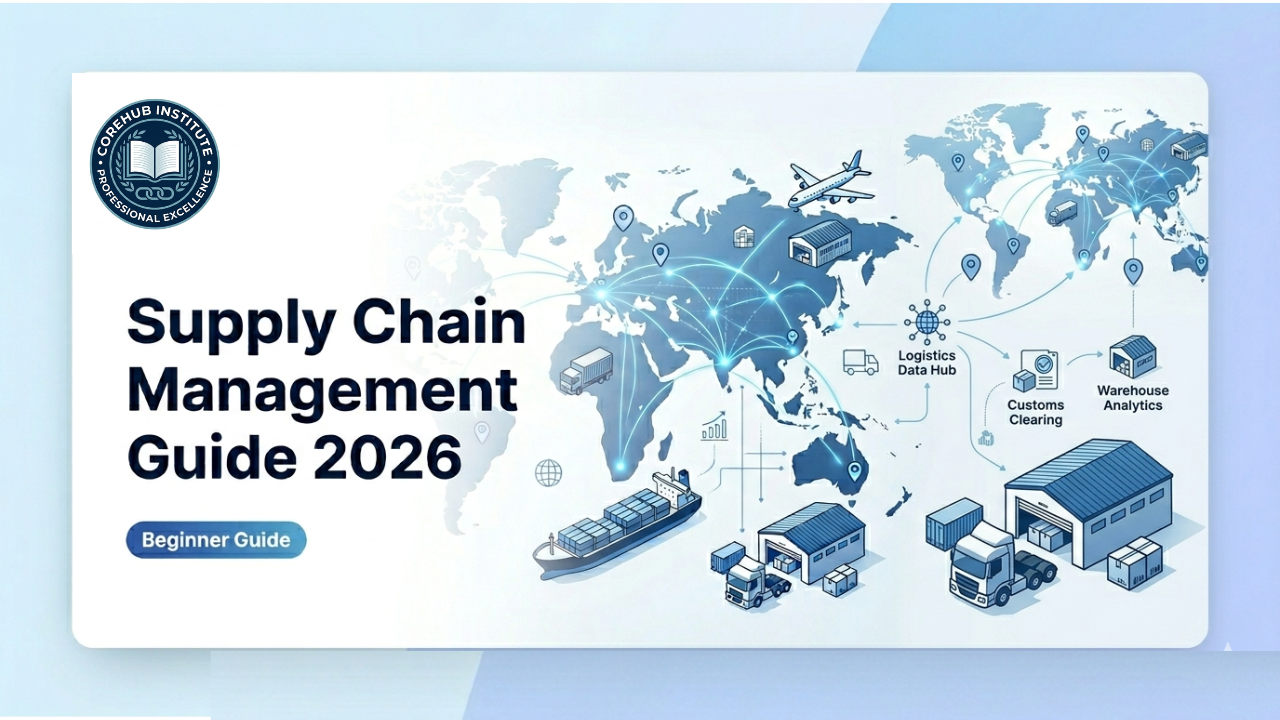
In today’s fast-moving global economy, businesses rely heavily on efficient systems to deliver products and services quickly and cost-effectively. This is where Supply Chain Management (SCM) plays a critical role.
From sourcing raw materials to delivering the final product to customers, supply chain management ensures everything runs smoothly. Whether it’s e-commerce, manufacturing, or retail — every industry depends on it.
What is Supply Chain Management?
Supply Chain Management is the process of managing the flow of goods, services, information, and finances from the origin point to the end customer.
Simple Example:
When you order a product online, it goes through multiple stages — supplier, warehouse, transportation, and final delivery. Managing all these steps efficiently is what supply chain management is all about.

Key Components of Supply Chain Management
1. Procurement
Sourcing raw materials or products from suppliers at the best price and quality.
2. Production
Converting raw materials into finished goods.
3. Inventory Management
Tracking and controlling stock levels to avoid overstocking or shortages.
4. Logistics & Transportation
Moving goods from one place to another efficiently.
5. Distribution
Delivering the final product to customers or retailers.
Why is Supply Chain Management Important?
- Cost Reduction: Optimizes operations to reduce unnecessary expenses
- Efficiency: Streamlines processes and improves productivity
- Customer Satisfaction: Ensures timely delivery and product availability
- Business Growth: Supports scalability and expansion
A well-managed supply chain can give businesses a strong competitive advantage.
Types of Supply Chains
Traditional Supply Chain
Focuses on basic sourcing, production, and distribution.
Digital Supply Chain
Uses technology, automation, and real-time data for better decision-making.
Global Supply Chain
Involves sourcing and distribution across multiple countries.
Skills Required for a Career in Supply Chain
To succeed in this field, you need:
- Analytical and problem-solving skills
- Communication and coordination abilities
- Understanding of logistics and operations
- Knowledge of tools and technologies (ERP, data analytics)
- Strategic thinking
Career Opportunities in Supply Chain
Supply chain management offers diverse and high-demand roles such as:
- Supply Chain Manager
- Logistics Manager
- Procurement Specialist
- Inventory Planner
- Operations Manager
With globalization and e-commerce growth, demand for skilled professionals is rapidly increasing.
How to Start a Career in Supply Chain
Starting a career in supply chain management requires a mix of knowledge, practical skills, and industry exposure.
The best way to begin is by enrolling in a professional certification program that provides hands-on training and real-world insights.
At CoreHub Institute, our programs are designed to make you job-ready with practical learning and industry-focused training.
Conclusion
Supply Chain Management is one of the most critical functions in modern businesses. With the right skills and knowledge, you can build a successful and future-proof career in this field.
Ready to Start Your Journey?
Upgrade your skills with our Certified Global Supply Chain Manager (CGSCM) program and become industry-ready.
👉 Enroll Now & Take the First Step Toward a Successful Career